

TL;DR
- Comparing an express car wash vs. a hand wash is all about efficiency and which method uses less water per vehicle.
- An express car wash has water recycling and high-pressure technology to reduce water consumption.
- A hand car wash often uses running hoses and inconsistent methods, leading to waste.
- In 2026, choosing an automated wash for your vehicle is a more logical and environmentally responsible approach.
Which Car Wash Method Saves More Water?
Water use is becoming a pressing concern in Florida. As of February 2026, around 75% of the state is experiencing drought, with another 4% classified as abnormally dry. With rainfall limited and reservoirs under pressure, conserving water has never been more important.
Even everyday activities, like washing your car, add up. A standard hand wash can use hundreds of gallons, while many modern automatic car washes can control water flow and recycle it where possible. In fact, express car washes use about 65% less fresh water than a typical hand wash.
In this article, we’ll go over how express car washes and hand washes work and compare their water use and efficiency.
How Does the Hand Car Wash Procedure Work?
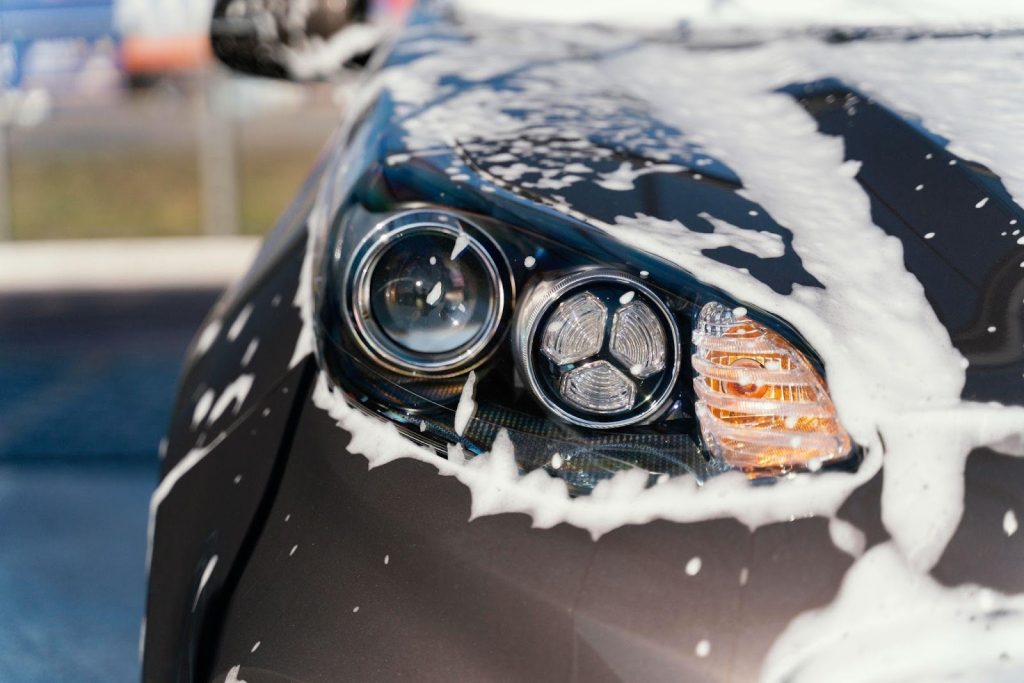
A hand car wash is a manual and step-by-step process that gives special attention to the vehicle’s surface. It is often chosen for its simplicity and control over each stage of cleaning. Here is how it works:
- Initial rinse: The vehicle is rinsed to loosen surface dust and debris before any products are applied.
- Soap application: Then, a cleaning solution is prepared in a bucket and applied using a sponge or wash mitt, working from the top of the vehicle downward. Each section of the tub is scrubbed individually to remove any sort of grime or buildup.
- Wheel and lower-body cleaning: Wheels and other lower panels are cleaned separately, as these areas collect heavier dirt and brake residue.
- Final rinse and drying: Soap residue is removed from all surfaces so that the vehicle is clean and streak-free. The car is then dried using towels or cloths to prevent marks and enhance the finish.
This entire process can use up to 40 to 140 gallons per vehicle, making it one of the most water-intensive ways to clean a car.
What Happens in an Express Car Wash?
An express car wash is an organized and automated process. Each step is controlled by systems that try to deliver uniform results for your vehicle. Here’s how it works
- Vehicle alignment and entry: The car is positioned on a conveyor system that guides it through the wash tunnel safely and properly. Then, cleaning formulas are applied all over the surface to loosen dirt and surface buildup.
- Automated cleaning phase: Soft cloths or foam brushes move across the vehicle’s exterior and remove grime from the paint and glass. There is a special cleaning focus on wheels, tyres, and lower panels where dirt collects the most.
- Rinse cycle: The vehicle goes through a final rinse stage to remove remaining residue, and air dryers remove moisture from the exterior to prepare the car for immediate exit.
On average, a professional car wash introduces only 9–15 gallons of fresh water per vehicle, as most systems reuse and filter water throughout the wash cycle.
Also Read: Automatic Car Wash: Is It Safе to Put Your Car in a Wash?
Why Express Car Washes Are the Smarter Choice for Water Conservation
Express car wash systems are engineered to minimize waste at every stage of the process. Here’s how:
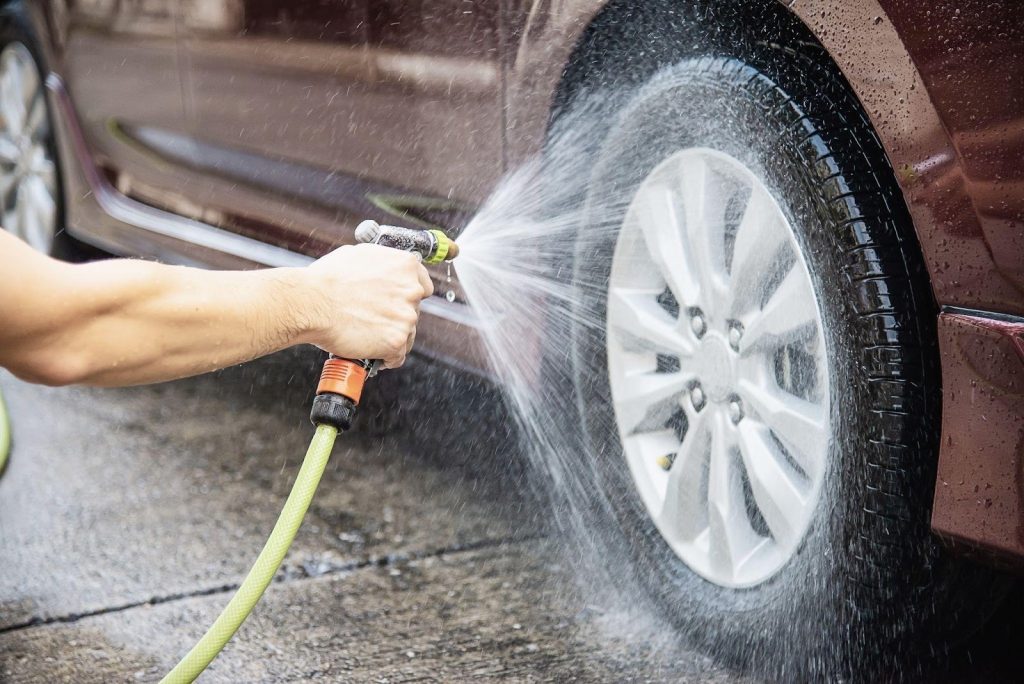
- Water control: An express car wash uses pre-programmed systems that release a fixed amount of water at each stage. In contrast, a hand car wash is completely dependent on the person’s judgment, which often leads to inconsistent water use and higher water consumption.
- Reuse and recycling: Most express car wash systems are designed to capture, filter and reuse a large portion of water. A hand car wash uses fresh water throughout the process, with runoff going directly into drains.
- Process efficiency: Automation allows express car washes to give vehicles a deep clean in a shorter time window, which avoids the need to use excess water. Hand car wash takes longer, increasing total water demand per vehicle.
- Runoff management: Express car washes have controlled drainage systems that limit waste. Hand car wash runoff is harder to manage and often carries soaps and debris into public water systems.
- Consistency at scale: When washing multiple vehicles, express car wash facilities maintain consistent car wash water consumption levels, while repeated hand washing multiplies water use with each vehicle.
Also Read: Important Safety Tips for an Automatic or Express Car Wash
How to Use Less Water While Washing Your Car?
One should always be mindful of water use when washing a car. This can be done without compromising on cleanliness by following a few simple rules. In both express and hand car washes, small changes in how and where a vehicle is cleaned significantly reduce waste. Here is how you can contribute:
- Choose a professional automatic car wash that uses water recycling systems.
- Avoid washing vehicles at home during peak heat hours when evaporation increases water loss.
- Turn off hoses when not actively rinsing to prevent any unnecessary runoff.
- Use a bucket system instead of a continuously running hose for spot cleaning.
- Wash only when needed rather than on a fixed weekly schedule.
- Check local water restrictions and follow community conservation guidelines.
Also Read: Touchless vs. Automatic Car Wash: Which Cleans Better?
Final Recommendations
In 2026, water isn’t something we can afford to treat casually. It is a limited resource, and the choice between an express car wash and a hand car wash can have a real impact over time.
In an express car wash, water is measured, reused where possible, and controlled from start to finish. Hand washing, while familiar, often relies on a steady flow of fresh water and leaves little room for managing runoff or overall use. Those small differences add up quickly.
At Bubble Brothers Car Wash, we’ve committed to doing things the smarter way. Our eco-friendly express car wash solutions rely on water-saving technology and responsible practices that reduce environmental strain without compromising on results. You get a clean vehicle, and the satisfaction of knowing the process respects the resources it depends on.
To know more:
Visit us: 916 S Kirkman Rd, Orlando, FL 32811
Call: (407) 802-2188
Email: info@bubblebrotherscarwash.com
FAQs
Q1. Is an express car wash safe for modern vehicle finishes?
Ans. Yes. Modern express car wash systems use soft materials and calibrated pressure designed to clean without damaging paint, clear coat or trim.
Q2. Does a hand car wash always use more water than an express wash?
Ans. In most cases, yes. Hand car wash methods rely on manual rinsing and lack water recycling, which often leads to higher overall car wash water consumption.
Q3. How does water recycling work in an express car wash?
Ans. Express car wash facilities capture runoff water, filter out debris, and reuse it for initial wash stages, significantly improving car wash water conservation.
Q4. Are express car washes regulated for water use?
Ans. Many express car wash operations follow strict local and environmental regulations, ensuring controlled water use and proper wastewater management.
Q5. Which option is better for frequent car cleaning?
Ans. For regular washing, express car wash systems are more efficient and consistent.