

TL;DR
Pressure washing can quickly clean your car, but common mistakes can cause serious damage. Here’s what to avoid:
- Pressure Issues: Use 1,200–1,900 PSI, a 40-degree nozzle, and keep a distance of 60–90 cm.
- Water Damage: Avoid spraying directly onto seals, engine components, or logos.
- Chemical Errors: Use car soap only, dilute properly, and rinse before the foam dries.
- Technique Flaws: Pre-rinse first and work top to bottom.
- Equipment Care: Clean filters regularly and use filtered water.
Introduction
Nothing makes you feel better than seeing your car shine after a good wash. A power washer can make this job very quick and easy, cutting your cleaning time in half while still doing a great job. However, many car owners don’t know that a powerful water jet can quickly become your worst enemy if you’re not careful. Let’s look at the most common mistakes people make while washing a car with a pressure washer.
Pressure-Related Mistakes That Damage Paint
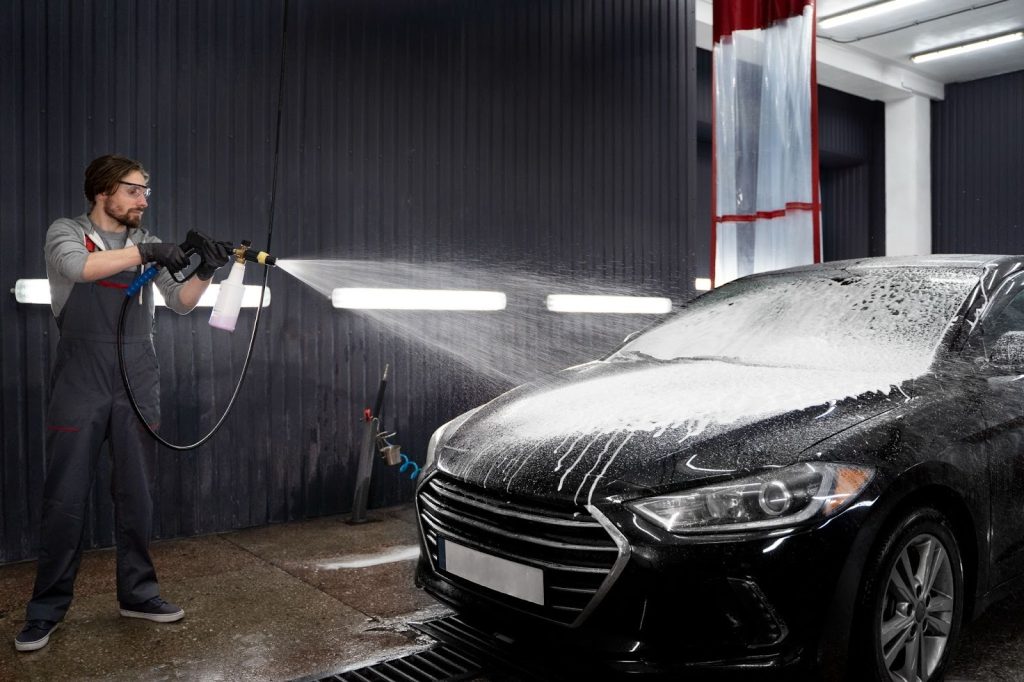
Here are common mistakes when washing a car with a pressure washer:
- Using Excessive PSI: High-pressure jets might blast away dirt more quickly, but they can also strip paint, leaving your car’s finish vulnerable to rust. The sweet spot for car washing is between 1,200 and 1,900 PSI; anything beyond that is overkill and may be destructive.
- Not Using the Correct Nozzle Degree: Not all nozzles are made equal, and choosing the wrong one is like bringing a sledgehammer to hang a picture frame. That’s basically a laser blast that can dent panels and chip paint in seconds. Stick with the 40-degree white nozzle for your car’s body as it disperses water over a bigger area, reducing concentrated pressure on any single spot.
- Holding the Wand Too Close to the Surface: Standing too close with your pressure washer is like pressing your face right up to a museum painting. When you hold the nozzle closer than 60 cm (about 2 feet), the concentrated water pressure works like sandpaper, scratching paint and potentially denting softer metal panels. Maintain a distance of 60–90 cm from your car’s surface.
Mistakes That Lead to Water Intrusion or Electrical Issues
Avoid these mistakes when washing a car with a pressure washer to prevent electrical issues:
- Spraying Directly Into Seals or Gaps: The plastic seals around your car’s doors and windows are there for a reason: to keep water out. When you blast these areas with high pressure, water can seep past these barriers and into sensitive electrical components, causing malfunctions that cost far more than a car wash ever should.
- Targeting Engine Bay Components: Unless you’re an expert mechanic who knows exactly what they’re doing, the engine bay should be off-limits when cleaning a car with a pressure washer. Water and electronics don’t mix, and modern cars are built with advanced electronics, including multiple sensors and control units that are vulnerable to high-pressure water.
- Spraying Too Aggressively Around Badges and Trim: Those decorative elements on your car (emblems, trim pieces, and decals) are often connected with adhesive rather than being part of the body itself. Pressure cleaners can easily dislodge or peel off these delicate components if you’re not careful.
Detergent and Chemical Application Mistakes
While pressure washing your car, remember these points as well:
- Using Non-Automotive Detergents: Reaching for dish soap or household cleaners might seem like a useful shortcut, but these products can strip away protective wax layers and damage your paint’s clear coat. Always use mild, biodegradable automotive soap especially designed for pressure washing cars.
- Overusing or Underdiluting Soap: More soap doesn’t equal more clean; it just means more gunk to rinse off. Follow the manufacturer’s mixing directions carefully. Too much detergent can cause streaks and attract more dirt, while too little won’t break down grime effectively.
- Rinsing Too Late After Foaming: Letting foam sit on your car for too long, especially in direct sunlight, causes it to dry and leave stubborn streaks that take extra effort to remove. Apply foam in sections and rinse before it dries. Work in the shade whenever possible to give yourself more time.
Technique Mistakes That Reduce Cleaning Quality
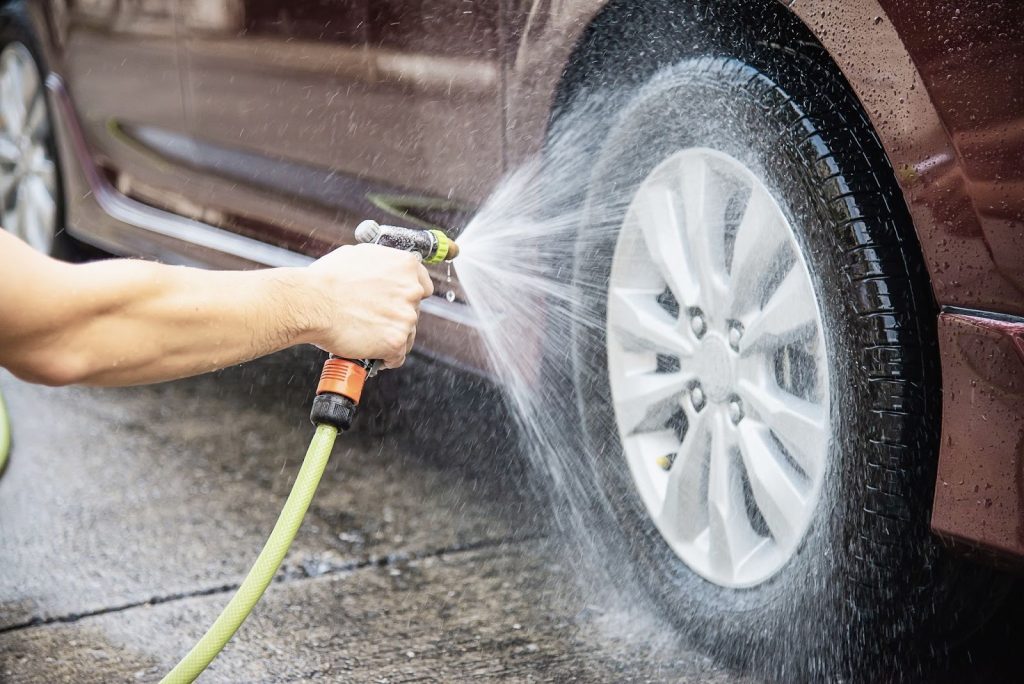
One of the biggest technique mistakes is neglecting to pre-rinse. Always start by cleaning your car with plain water using a 40-degree nozzle to remove loose dirt and debris. Skipping this step means you’re literally grinding particles into your paint when you start scrubbing.
Also, remember to work from top to bottom. Gravity is your friend here. Starting at the roof and working your way down avoids dirty water from dripping onto sections you’ve already cleaned.
Equipment Misuse Mistakes
Clean nozzles and filters after every use to avoid blockages that reduce efficiency. Check pipes and O-rings regularly for wear and tear. Using tap water without filtration is another common mistake, since minerals and impurities can build up inside the pump, reducing its lifespan and performance. Likewise, using an undercarriage pressure washer incorrectly, especially at very high pressure or too close to the vehicle, can force water into sensitive components.
Conclusion
Washing a car with a pressure washer doesn’t have to be difficult or risky. Avoiding these mistakes can help you achieve a professional-level clean without worrying about accidental damage. Take your time, follow these guidelines, and enjoy the pleasure of a spotless vehicle that stays protected wash after wash.
Keep your car protected with a professional wash every time. If you are also searching for a car wash monthly membership near me, visit Bubble Brothers Car Wash for unbeatable shine. Drive in today and experience the difference!
FAQs
Q1. Is a pressure washer safer for cars when using a foam cannon?
Ans. Yes, foam cannons apply soap evenly at lower pressure, allowing detergent to loosen dirt gently before rinsing, lowering the risk of scratching or damaging paint during washing.
Q2. What PSI setting works best for cleaning wheel wells and tyres?
Ans. Use 1,200–1,900 PSI with a 25-degree sprayer for wheel wells and tires. This offers enough power to remove brake dust and grime without damaging rubber or sensors.
3. Can electric pressure washers hurt car paint less than gas models?
Ans. Yes, electric models usually max out at 3,000 PSI, while gas models max out at 4,000 PSI, making them gentler and more suitable for home car washing without the risk of paint damage.
Q4. How does water hardness affect pressure-washing results on cars?
Ans. Hard water leaves mineral deposits and spots on paint, and it also builds up inside the pump. Use filtered or softened water for streak-free effects and longer equipment lifespan.
Q5. Are touchless pressure-wash soaps safer for ceramic-coated vehicles?
Ans. Yes, touchless detergents are formulated to clean without physical contact, maintaining ceramic coating integrity. Always choose pH-neutral, ceramic-safe formulas designed especially for coated vehicles.